If you’re tired of Paris travel guides that always cover the same ground in the same way, you’re in the right place. At Travel 2 Concert, we help you build your own itinerary around your passion for rock — including the side of Paris that most tourists never see. In this piece, we’ll walk you through a tour of Jim Morrison’s Paris, in the final months of the The Doors frontman’s life.
In March 1971, Jim Morrison stepped off a plane in Paris unshaven, his face swollen from the weight he’d put on, carrying a bag full of notebooks and books. He was 27 years old — the voice of one of the most influential bands in American rock — and he was simultaneously trying to escape everything that meant.
Why Did Jim Morrison Go to Paris?
Traveling with his girlfriend Pamela Courson, Morrison came to Paris with a relatively simple idea: to stop. To leave behind the Miami trial, where he’d been charged with indecent exposure at a concert, the pressures of Los Angeles, and the “Lizard King” persona that seemed to be consuming him. In Paris, Jim Morrison wanted to immerse himself in poetry.
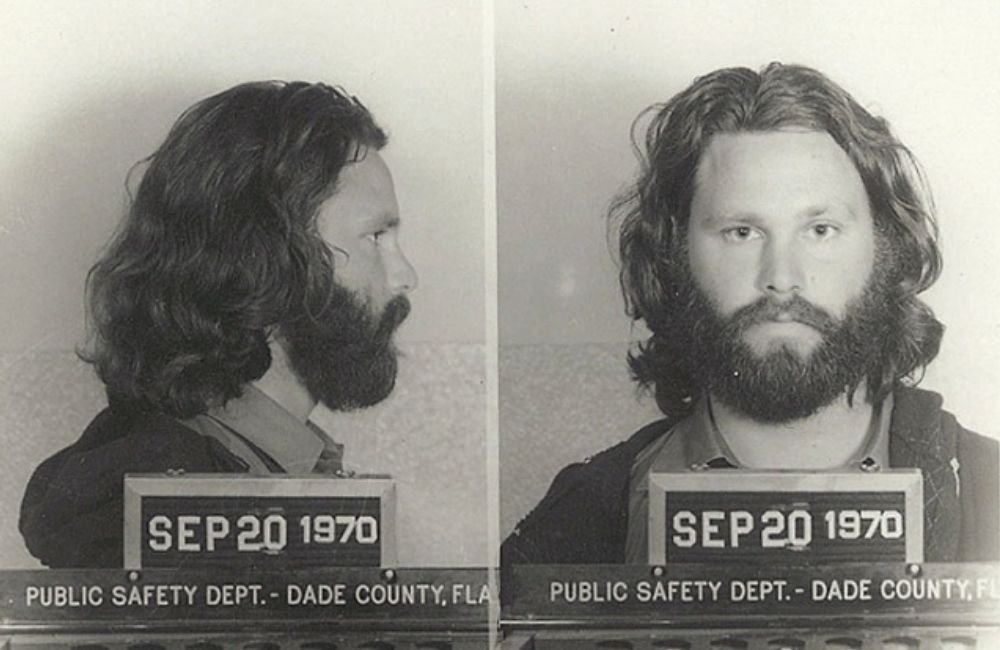
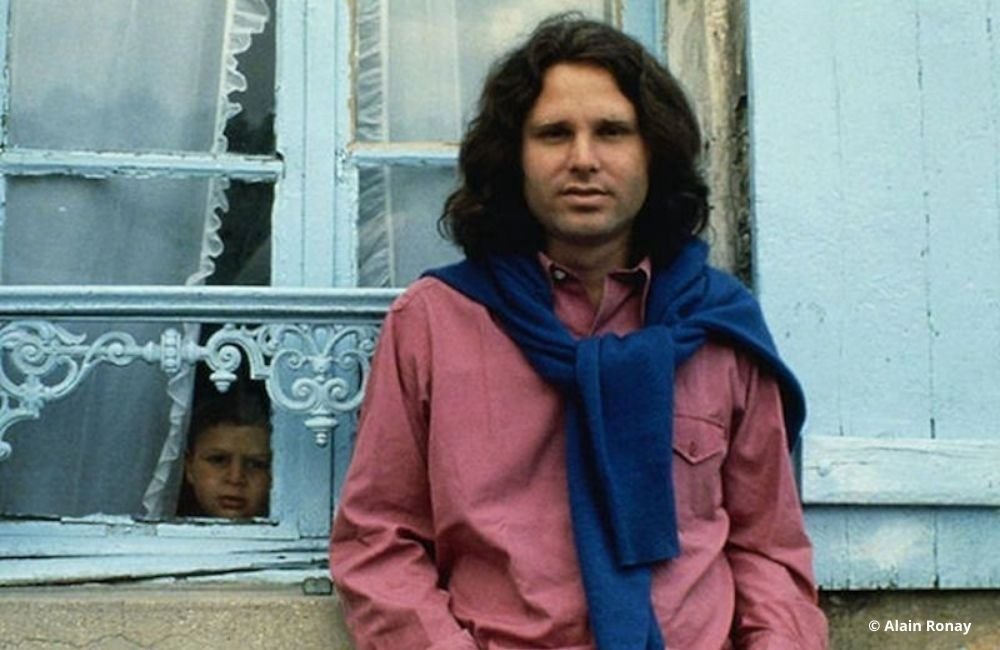
Morrison lived in the city for only a few months, until his death on July 3, 1971. But those months are so well documented — through accounts from people who knew him, photographs, and fragments of poetry — that it’s still possible today to walk the streets where he wandered and get a sense of what he was looking for.
This itinerary is for anyone who wants to discover a different side of Paris and feel something of Jim Morrison’s energy in the streets where he lived.
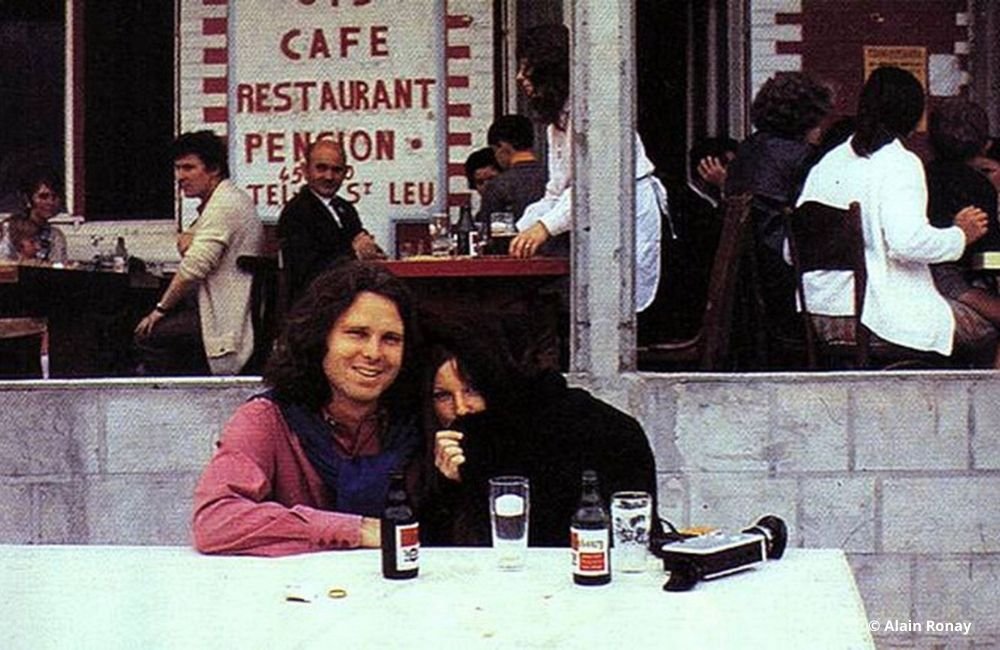
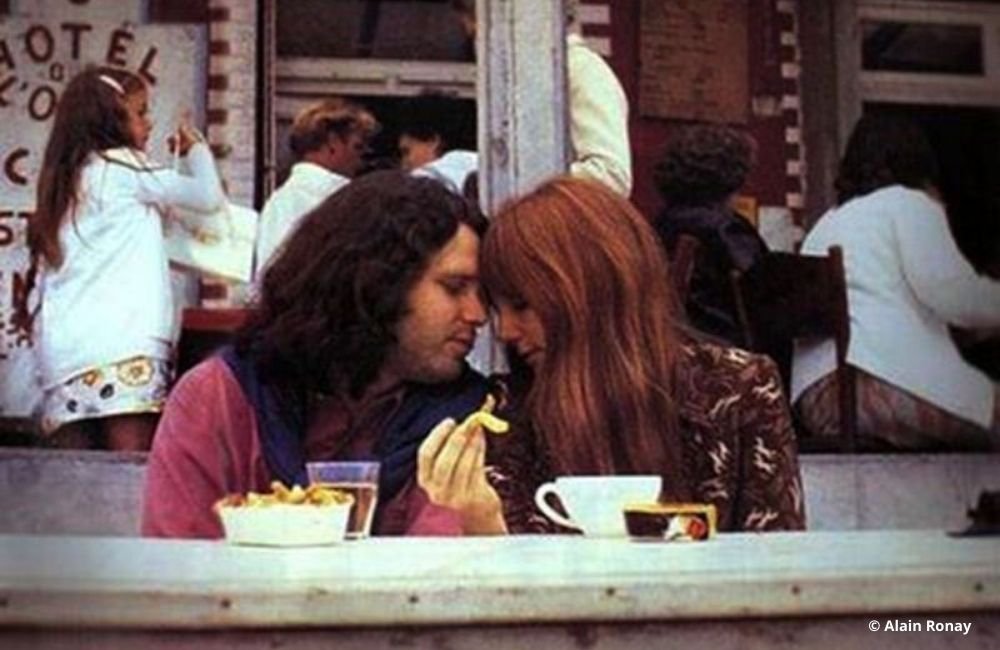
A complete guide to Jim Morrison’s Paris
1. Jim Morrison and Pamela Courson’s Apartment in Paris
📍 17 Rue Beautreillis — 4th arrondissement

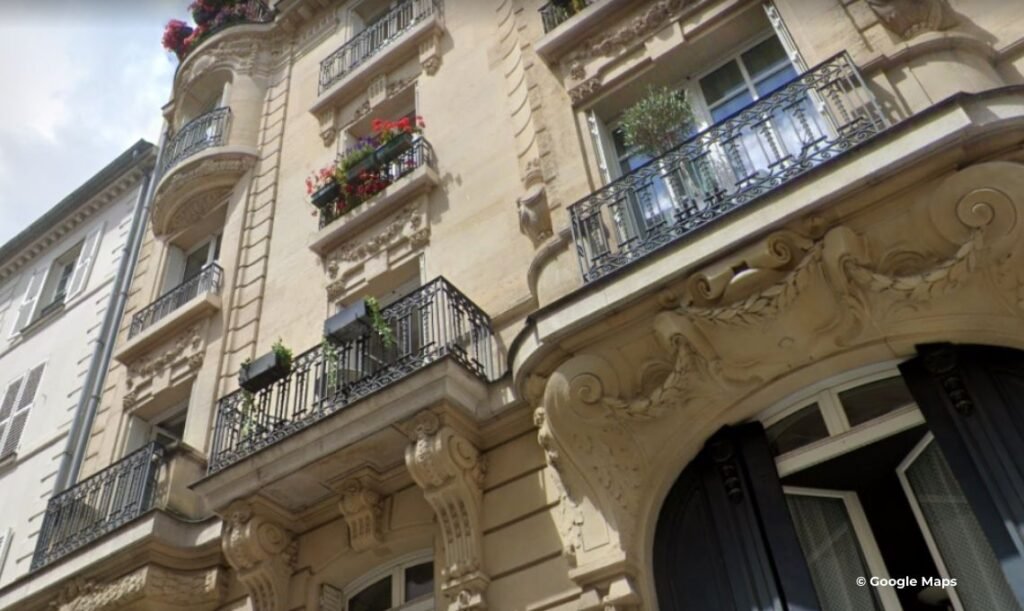
Start here. This is one of the most important stops on the tour, and also the most understated: a pale stone building in the Marais, with elegant windows and wrought-iron details, which Morrison himself described as “cozy” — in the most literary sense of the word.
Jim Morrison and Pamela rented an apartment on the third floor in June 1971. The window on the left is the one you can see from the street.
Le Marais, a historic neighborhood with deep Jewish roots, had nothing in the 1970s that reminded Morrison of his routine in Los Angeles. Which made it perfect.
This is the address where Morrison was found dead on July 3, 1971, in the apartment’s bathtub. Pamela Courson said he had complained of difficulty breathing during the night and gone to take a bath. When she woke up, she found him there. The official cause of death was listed as heart failure. The exact circumstances, however, were never fully clarified.
The apartment remains private property, used for both residential and commercial purposes, so the interior cannot be visited. There’s also no plaque, no official marker on the façade. But perhaps that absence says something about Jim Morrison’s Paris: he came here, at least in part, looking for anonymity.
Try arriving early in the morning, when Rue Beautreillis is nearly empty. Look up at the third-floor window. If you want, bring one of Morrison’s poetry books, lean against the building and read a few lines. Chances are it’ll hit you.
2. Place des Vosges: Where Jim Morrison Watched the World Go By
📍 Place des Vosges — 4th arrondissement
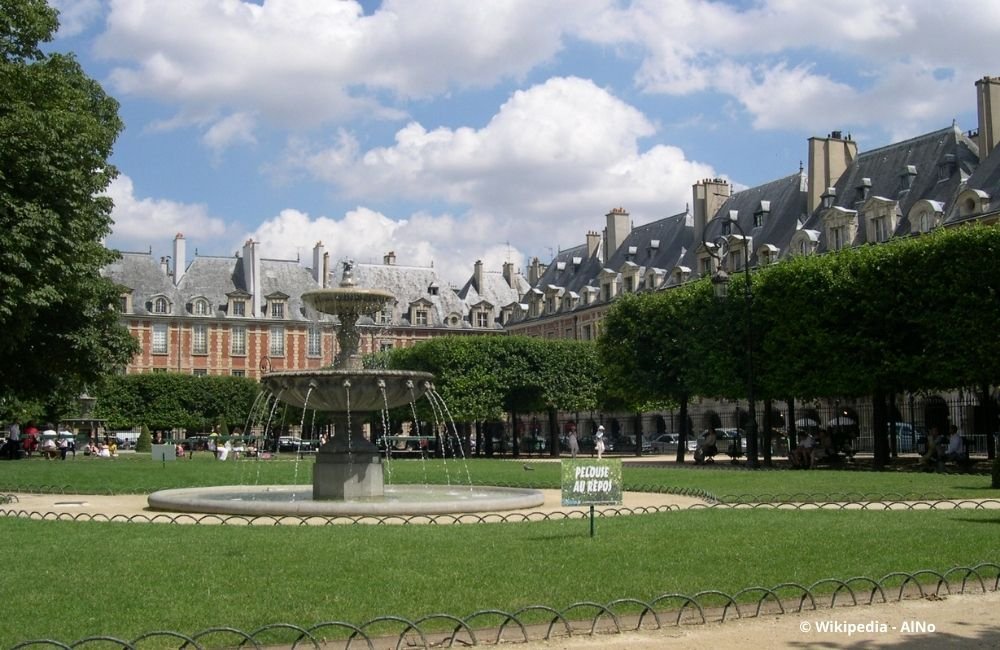
This is the oldest square in Paris, and for a few months in 1971, one of Jim Morrison’s favorite places. Built in 1612, Place des Vosges has an almost perfect geometry: 36 red-brick pavilions arranged symmetrically around a garden of fountains, linden trees, and green-painted iron benches.
Morrison came here often, sat on one of the benches, and wrote. It’s likely that some of the poems in his notebook — later known as the Paris Journal — were sketched out here. He also simply watched. There was something about the human scale of Place des Vosges, the feeling of being inside elegant but welcoming architecture, sharing space with old men, families, couples, people on their own. Maybe that atmosphere was exactly what he was looking for.
Sit on one of the benches under the lindens, or on the lawn, and write something — in a notebook, on your phone, on a napkin. In Morrison’s poetry, writing was inseparable from observation. This square invites exactly that.
3. Le Marais: Morrison’s Everyday Life in Paris
📍 Rue Saint-Antoine and Rue Beautreillis — 4th arrondissement

Morrison loved Le Marais for its quietness and its neighborhood scale. Where Los Angeles required a car and long distances for everything, here he could walk to buy what he needed and spend a whole afternoon outside without having anywhere particular to be.
On Rue Saint-Antoine, he used to buy cheese from a corner shop called Les Fils Pervrier (at number 43, today a pizzeria). The façade and business may have changed, but the street is the same — wide sidewalks, buildings with wrought-iron balconies.
It was also on this street, on July 2, 1971, that Jim Morrison had his last meal at one of the nearby cafés. He ate sweet-and-sour chicken and drank beer, with Pamela and his friend Alain Ronay.
On Rue Beautreillis, at number 25 — right next to his apartment — he used to buy white wine from a historic wine shop called Vin des Pyrénées, a place that still bears its original name and façade today, though it has since been transformed from a bottle shop into a restaurant.
Walking along Rue Saint-Antoine and Rue Beautreillis today is, in some real sense, walking the same circuit he did. The scale hasn’t changed. The stones are the same.
A local ritual worth trying: Buy cheese and white wine from one of the shops on Rue Saint-Antoine or Rue Beautreillis and bring it to Place des Vosges. It’s exactly what Morrison used to do.
4. L’Hôtel and the Hôtel George V: Jim Morrison’s First Months in Paris
L’Hôtel
📍 13 Rue des Beaux-Arts — 6th arrondissement
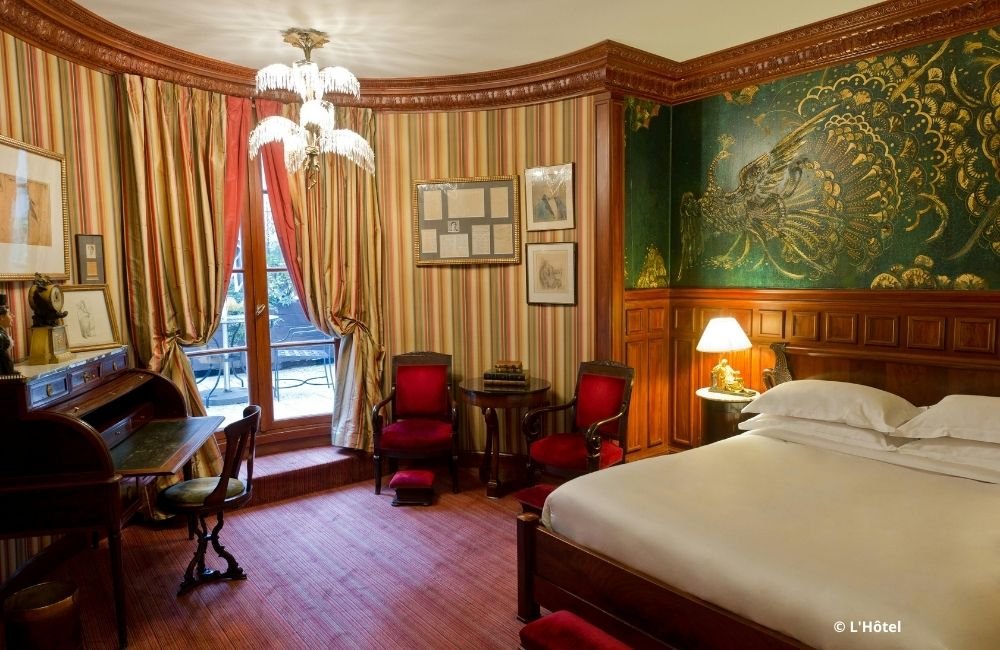
Morrison stayed for a period at L’Hôtel, in the heart of Saint-Germain-des-Prés on the Left Bank.
The hotel has a dense literary history: this is where Oscar Wilde died in 1900, in Room 16. Morrison stayed specifically in that room — a deliberate choice, loaded with symbolism.
One story from those early weeks claims that during a drunken night, Morrison fell from a hotel window onto a parked car and walked away unharmed.
L’Hôtel was later renovated, but it still has a distinctive interior with fabric-lined walls.
Even if you’re not staying, it’s worth stepping inside for a drink at the bar and taking in the atmosphere.
Hôtel George V
📍 31 Avenue George V — 8th arrondissement

Before finding the apartment in Le Marais, Morrison stayed at the George V — one of Paris’s most luxurious hotels, whose formality he described with characteristic irony as a “red plush whorehouse.” It was exactly the kind of place he needed to leave behind.
A quick pass by the George V’s façade is enough to feel the contrast between the rockstar world Morrison was trying to escape and the neighborhood life he went looking for in Le Marais.
5. Saint-Germain-des-Prés: Jim Morrison Among Cafés and Books
Café de Flore and Les Deux Magots
📍 Boulevard Saint-Germain — 6th arrondissement
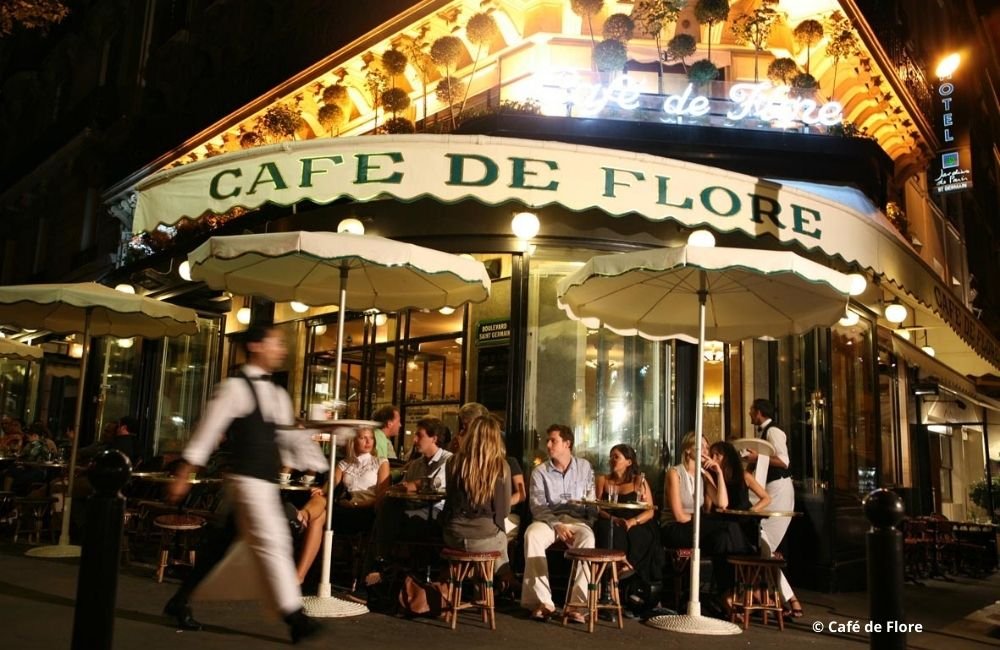
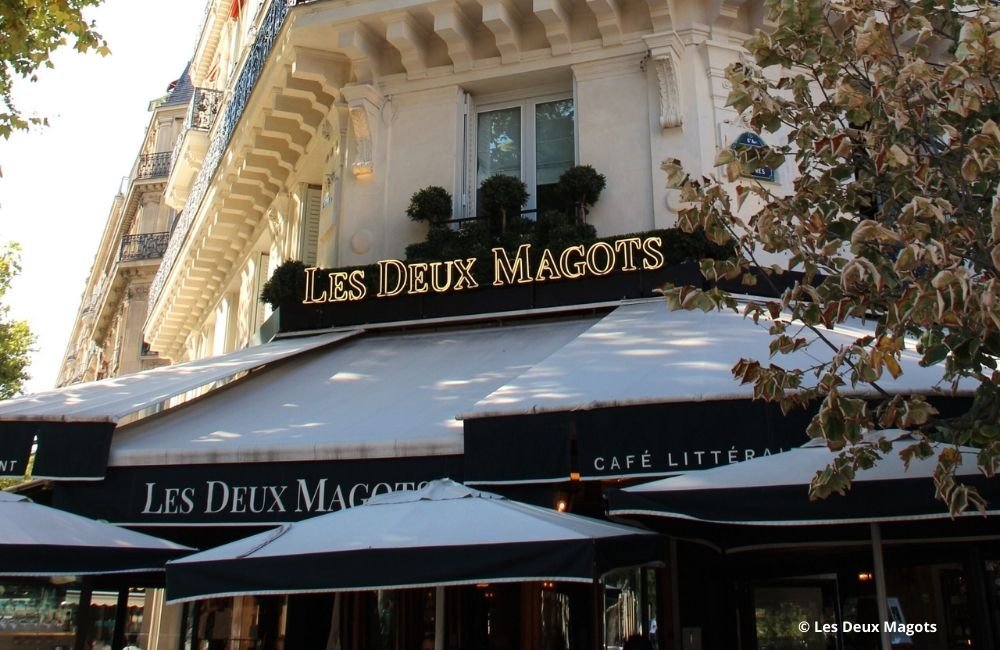
Morrison frequented both of Saint-Germain’s most iconic cafés, side by side on the Boulevard Saint-Germain and long-established meeting points for writers, philosophers, and artists. Café de Flore, with its classic wicker chairs spilling onto the sidewalk; Les Deux Magots, with its more pronounced Art Deco design (recently renovated). Morrison observed the Parisian intellectual scene from these terraces with a mixture of admiration and skepticism that was very much his style.
Jean-Paul Sartre and Simone de Beauvoir had used both cafés as their offices decades earlier. That tradition was still alive. Morrison, who wanted to be recognized as a poet, found in Saint-Germain an environment that took literature seriously in a way that Los Angeles never had.
Pick one, sit down, order a glass of white wine, a beer, or a coffee, and stay for an hour or two. Bring something to read or write.
Shakespeare and Company
📍 37 Rue de la Bûcherie — 5th arrondissement
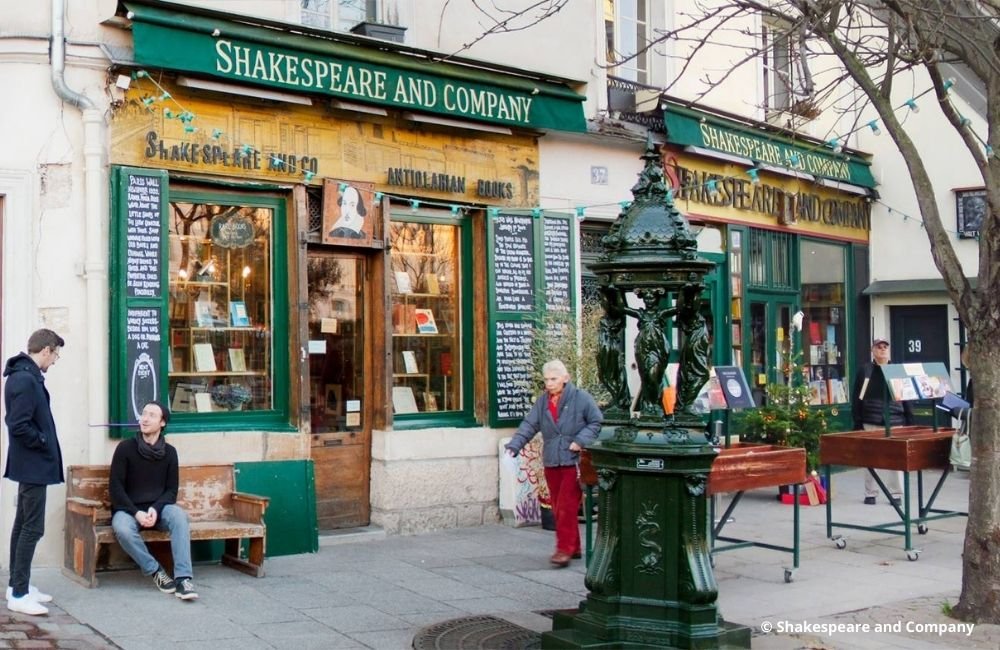
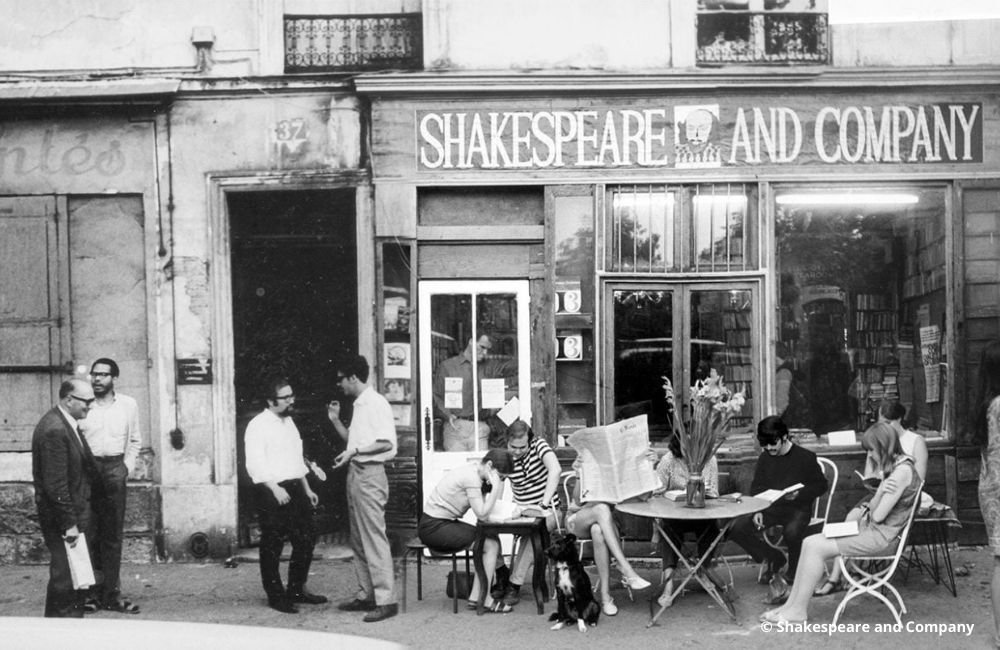
The most famous English-language bookshop in Paris, a short walk from the banks of the Seine. Jim Morrison came here to browse the shelves, following a tradition that had already passed through Ernest Hemingway and F. Scott Fitzgerald.
The current shop, founded in 1951 by George Whitman, feels like a labyrinth assembled over decades: floor-to-ceiling shelves, books stacked on the floor beside old typewriters and worn furniture.
Find the poetry section. Pick up something by Arthur Rimbaud or Charles Baudelaire — two 19th-century French poets Morrison regularly cited as influences. It makes for a meaningful souvenir from this itinerary.
6. Île Saint-Louis and Quai d’Anjou: Morrison by the Seine
📍 Quai d’Anjou — 4th arrondissement, Île Saint-Louis
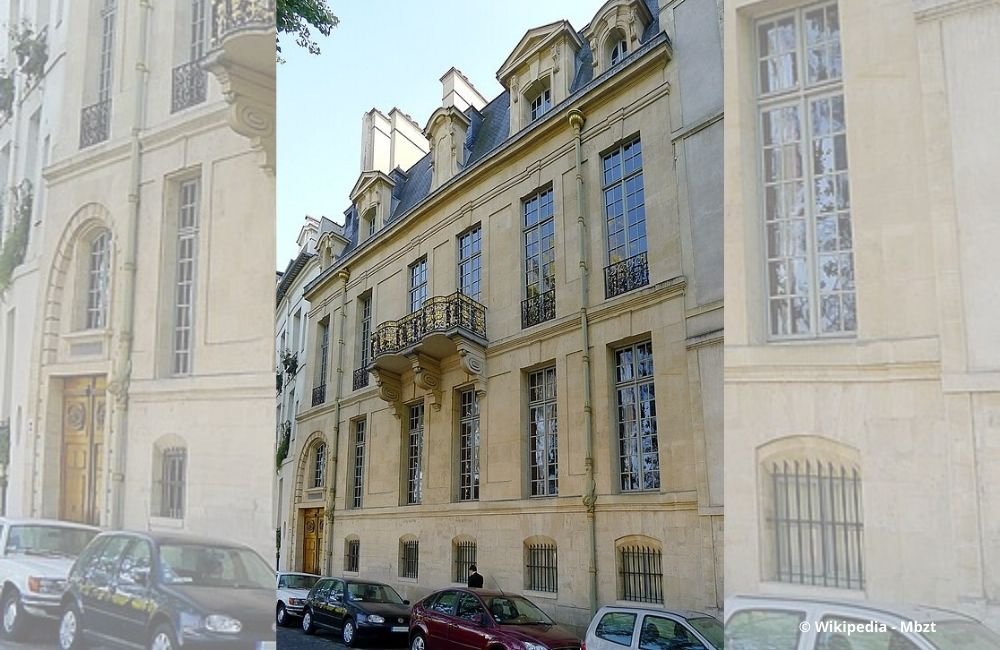
Jim Morrison liked to walk through the Île Saint-Louis and sit by the Seine to watch the boats. Quai d’Anjou held a particular pull for him: at number 17, the Hôtel de Lauzun, an old mansion where the French poet Charles Baudelaire had once lived, and where the “Club des Hashischins” — a gathering of writers and artists — had met in the 1840s. Morrison knew this history and perhaps found in it a kind of kinship.
Île Saint-Louis is one of the most preserved parts of Paris. With no metro stop and none of the major national monuments, it functions as a quiet residential enclave in the middle of the river.
Walk along the Quai d’Anjou at dusk, when the light drops lower and the Seine starts to turn gold. Sitting by the river here — as Morrison did — is one of the simplest and oldest things you can do in Paris.
7. Rue de Seine and the Rock n’ Roll Circus: Where He Had Access to Heroin
📍 57 Rue de Seine — 6th arrondissement
The Rock n’ Roll Circus was a discotheque at 57 Rue de Seine, on the Left Bank. In the early 1970s, it was a central node of Paris’s heroin scene. Morrison was a regular. The club has since closed, and the address now houses other businesses, but Rue de Seine still follows its original layout.
This is also the location at the center of one of the most persistent controversies around Morrison’s death. Marianne Faithfull, who knew the Paris circle well at the time, later claimed that Morrison had suffered an accidental heroin overdose at the Rock n’ Roll Circus that night — and that his body had been brought back to the apartment to avoid a scandal, particularly involving drug dealers. The account has never been confirmed or definitively ruled out, largely because no autopsy was ever performed. Morrison was buried two days after his death, with no formal investigation.
Walk from Rue de Seine to Rue des Beaux-Arts, where L’Hôtel is located. It’s a short route that connects two of the most charged stops on this tour.
8. Père-Lachaise Cemetery: Jim Morrison’s Final Resting Place
📍 Boulevard de Ménilmontant — 20th arrondissement
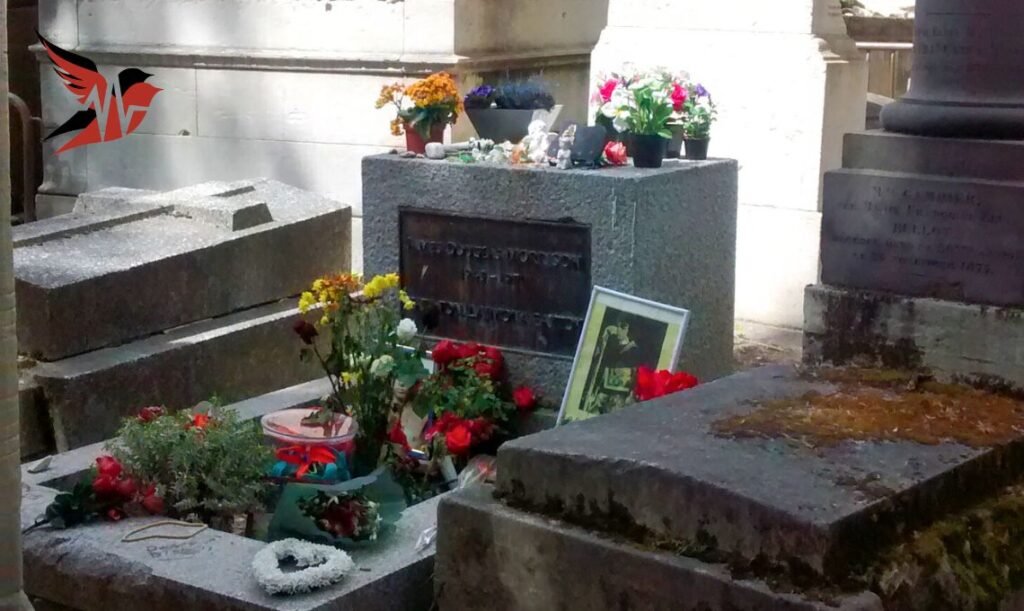
Jim Morrison visited Père-Lachaise in the week before his death and, according to friends, expressed a wish to be buried there. Two days after he died, permission was granted — on the grounds that he was a poet, not a musician. He is in Division 6.
Père-Lachaise is one of the largest parks in Paris: 44 hectares, more than 70,000 graves, and 6,000 full-grown trees that filter the light differently depending on the season. It might seem like a bleak stop on a travel itinerary, but there’s a quiet beauty to the place — a peculiar peace that comes from so much history gathered in one space.
Morrison’s grave is one of the most visited in the cemetery, alongside those of Oscar Wilde, Édith Piaf, and Frédéric Chopin. After years of vandalism and destructive behavior by fans, railings were installed around the site. At one point, the cemetery’s director reportedly said that if he could, he’d have Morrison removed from the grounds for “causing too many problems.” Morrison’s plot is a perpetual concession, however, and security has been steadily reinforced over the decades.
The current headstone, placed in 1990 with the involvement of Morrison’s father, bears a Greek inscription: KATA TON DAIMONA EAYTOY — loosely translated as “True to his own spirit” or “According to his own destiny.”
Arrive when the gates open to have a few minutes of quiet before the tour groups arrive. Bring a copy of Morrison’s poems if you want to pay your own tribute.
9. Passerelle Jim Morrison: A Posthumous Tribute
📍 Rue Mornay — between Boulevard Bourdon and Boulevard de la Bastille, 4th/12th arrondissements

In 2025, the Paris city council named a footbridge over the Arsenal harbor after Jim Morrison. The bridge, built in 1825, sits near the Bastille and just a few minutes from Morrison’s apartment on Rue Beautreillis.
The Passarelle Jim Morrison it’s a recent addition to the Jim Morrison map of Paris — and a discreet one, like everything on this tour. The bridge is not grandiose: it’s a simple structure crossing the canal, with a view of the boats moored in the Arsenal harbor. But the name makes geographic sense. Morrison crossed this area hundreds of times in the months he lived in Le Marais.
The Passerelle makes a good place to begin or end the day, since it sits naturally on the way to the apartment. Cross it slowly.
Jim Morrison and His Paris Journal
The Paris Journal is a notebook found among Morrison’s belongings after his death, considered by many to be his final written work.
The cover bears the title in his own handwriting. Inside: a single 14-page poem and a second poem on the last page.
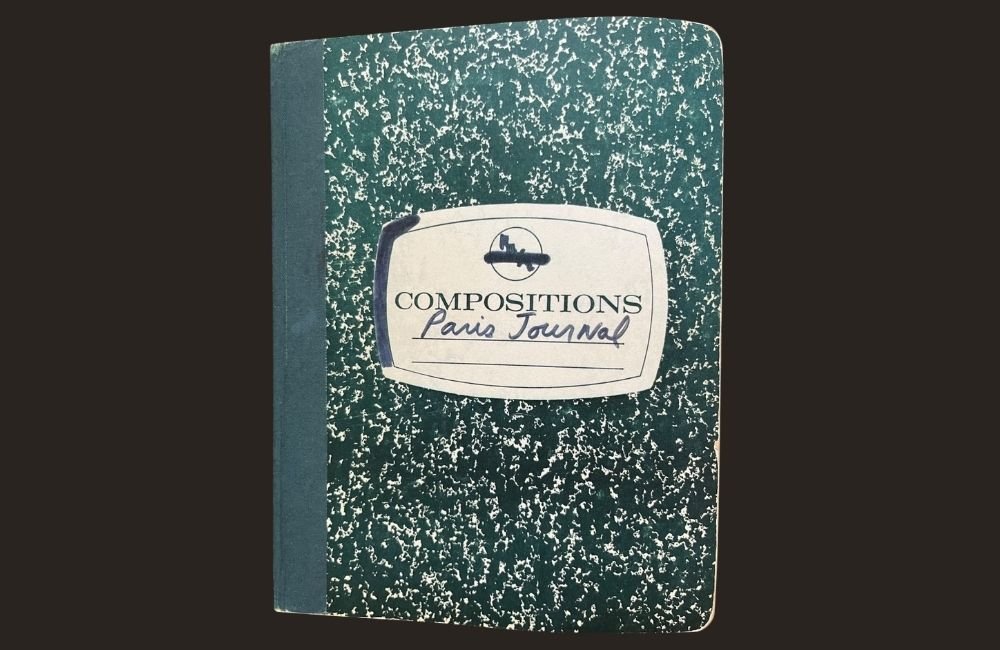
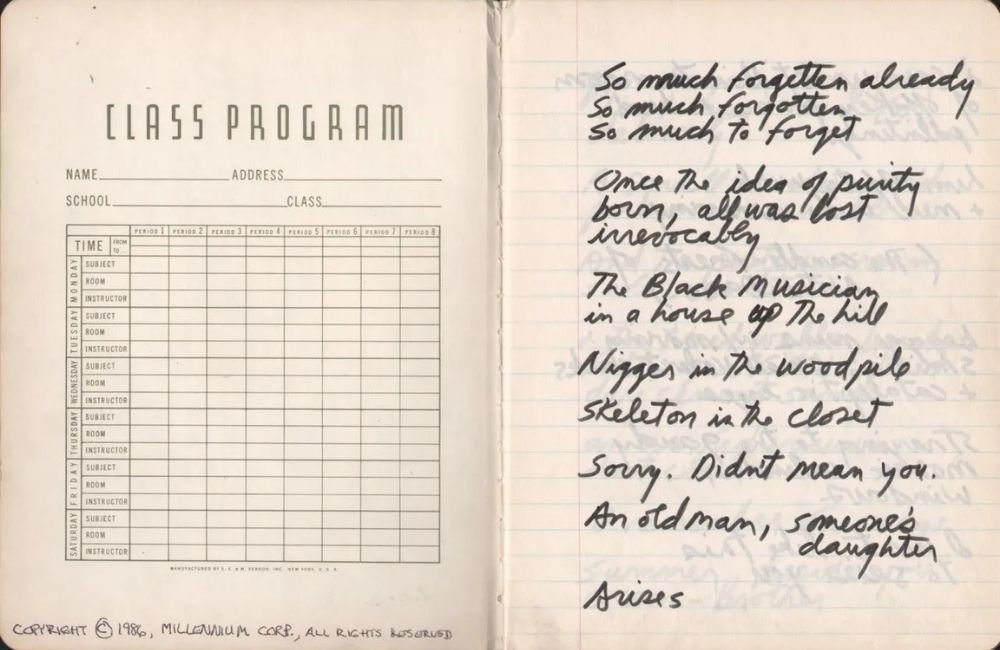
The notebook was part of the “127 Fascination” collection — an archive of manuscripts kept by Pamela Courson that disappeared after her death in 1974. The documents were rediscovered in 1986, in a safe in California.
Paris Journal
So much forgotten already
So much forgotten
So much to forget
Once the idea of purity
born, all was lost
irrevocably
The Black Musician
in a house up the hill
Nigger in the woodpile
Skeleton in the closet
Sorry, Didn’t mean you.
An old man, someone’s
daughter
Arises
& sees us still in the room
of off-key piano & bad
paintings
him off to work
& new wife arriving
(The candle-forests of
Notre-Dame)
beggar nuns w/moving
smiles, small velvet sacks
& cataleptic eyes
straying to the gaudy
Mosaic calendar
Windows
I write like this
to seize you
give me your love, your
tired eyes, sad for
delivery
A small & undiscover’d
park-we ramble
And the posters scream
safe revolt
& the tired walls barely
fall, graffiti into
dry cement sand
an overfed vacuum
dust-clock
I remember freeways
Summer, beside you
Ocean-brother
Storms passing
electric fires in the night
“rain, night, misery-
the back-ends of wagons”
Shake it! Wanda,
fat stranded swamp
Woman
We still need you
Shake your roly-poly
Thighs inside that
Southern tent
So what.
It was really wild
She started nude & put
on her clothes
An old & cheap hotel
w/bums in the lobby
genteel bums of satisfied
poverty
Across the street, a
famous pool-hall
where the actors meet
former ace-home of
beat musicians
beat poets & beat
wanderers
in the Zen tradition
from China to the
Subway
in 4 easy lifetimes
Weeping, he left his pad
on orders from police
& furnishings hauled
away, all records &
momentos, & reporters
calculating tears &
curses for the press:
“I hope the Chinese junkies
get you”
& they will
for the poppy
rules the world
That handsome gentle
flower
Sweet Billy!
Do you remember
the snake
your lover
tender in the tumbled
brush-weed
sand & cactus
I do.
And I remember
Stars in the shotgun
night
eating pussy
til the mind runs
clean
Is it rolling, God
in the Persian Night?
“There’s a palace
in the canyon
where you & I
were born
Now I’m a lonely Man
Let me back into
the Garden
Blue Shadows
of the Canyon
I met you
& now you’re gone
& now my dream is gone
Let me back into your Garden
A man searching
for lost Paradise
Can seem a fool
to those who never
sought the other world
Where friends do lie & drift
Insanely in
Their own private gardens”
The cunt bloomed
& the paper walls
Trembled
A monster arrived
in the mirror
To mock the room
& its fool
alone
Give me songs
to sing
& emerald dreams
to dream
& I’ll give you love
unfolding
Sun
underwater, it was
immediately strange
& familiar
the black boy’s
from the boat, fins & mask,
Nostrils bled liquid
crystal blood
as they rose to surface
Rose & moved strong
in their wet world
Below was a Kingdom
Empire of still sand
& yes, party-colored
fishes
-they are the last
to leave
The gay sea
I eat you
avoiding your wordy
bones
& spit out pearls
The little girl gave
little cries of surprise
as the club struck
her sides
I was there
By the fire in the
Phonebooth
I saw them charge
& heard the indian
war-scream
felt the adrenalin
of flight-fear
the exhilaration of terror
sloshed drunk in
the flashy battle blood
Naked we come
& bruised we go
nude pastry
for the slow soft worms
below
This is my poem
for you
Great flowing funky flower’d beast
Great perfumed wreck of hell
Great good disease
& summer plague
Great god-damned shit-ass
Mother-fucking freak
You lie, you cheat,
you steal, you kill
you drink the Southern
Madness swill
of greed
you die utterly & alone
Mud up to your braces
Someone new in your
knickers
& who would that be?
You know
You know more
than you let on
Much more than you betray
Great slimy angel-whore
you’ve been good to me
You really have
been swell to me
Tell them you came & saw
& look’d into my eyes
& saw the shadow
of the guard receding
Thoughts in time
& out of season
The Hitchiker stood
by the side of the road
& levelled his thumb
in the calm calculus
of reason.
Want to know more about Jim Morrison’s time in Paris?
- The Complete Paris Guide for Jim Morrison Fans
- The Mysteries of Jim Morrison’s Paris – Bonjour Paris
- What Jim Morrison Ate – The Food Etymologist
Rock Route in Paris, France ♫
Here you’ll find great record stores, nice venues for live shows, and bars that keep the rock spirit alive. Check out our full guide and explore the updated concert listings.